Summer is one of the best times of year to spot dragonflies, damselflies and the dazzling demoiselles. Whether you’re walking beside a pond, wandering along a riverbank or simply enjoying your local park, there’s a good chance you’ll see a flash of brilliant blue, emerald green or sparkling bronze darting through the air.
Most of us look up and say, “Oh look, a dragonfly!”
And while that’s not surprising, there is actually a little more to the story.
The insects we often call dragonflies belong to three different groups: dragonflies, damselflies and the wonderfully elegant demoiselles – a beautiful family of damselflies known for their shimmering wings and graceful flight.
The good news is that you don’t need to become an insect expert to tell them apart.
Learning the difference between damselflies and dragonflies isn’t about memorising names or passing a wildlife quiz. It’s simply another way to slow down, look a little closer and notice the remarkable variety that’s all around us.
Once you know what to look for, you’ll start seeing these spectacular insects in a whole new way.
The Difference Between Damselflies and Dragonflies
Although they’re close relatives, dragonflies, damselflies and demoiselles each have their own distinctive appearance and personality.
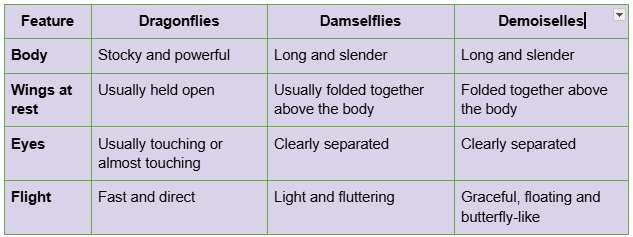
One of the easiest ways to tell them apart is to watch how they rest.
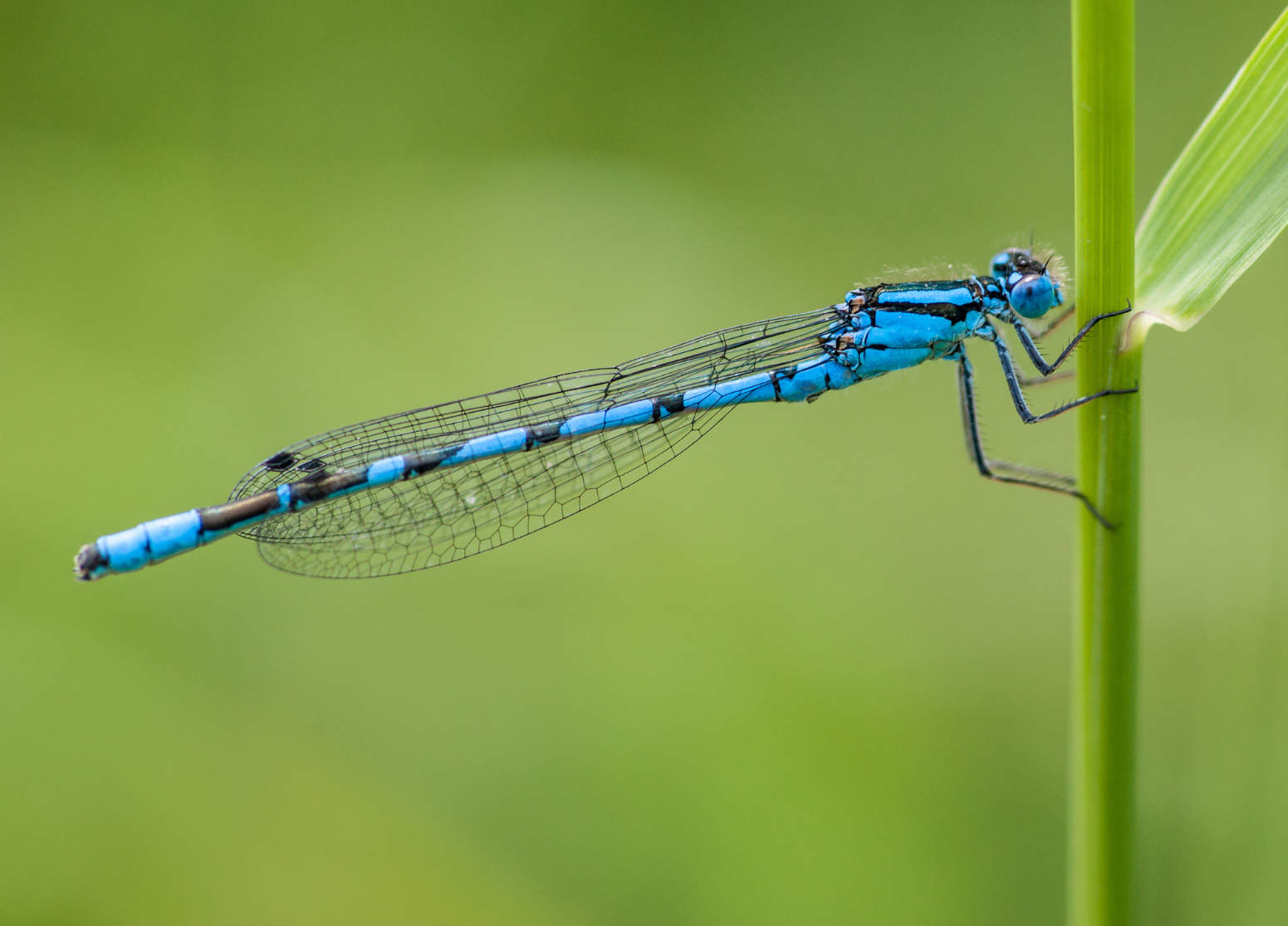
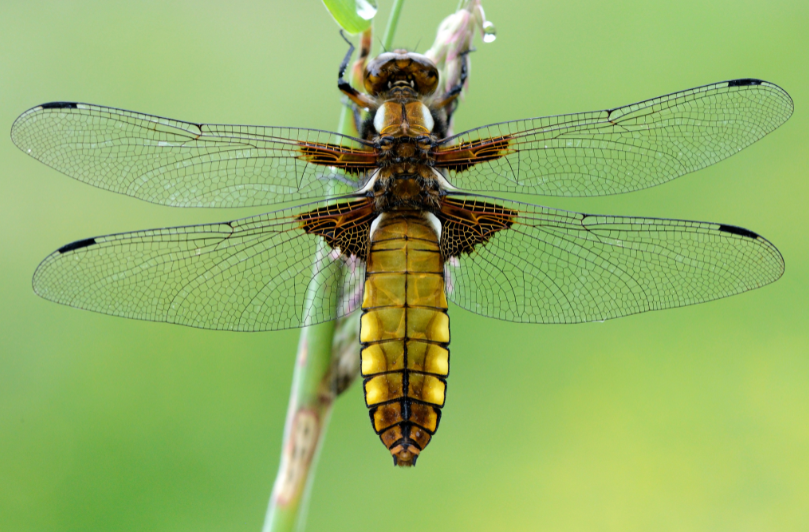
Most dragonflies hold their wings out to the sides like a tiny aeroplane, while most damselflies fold their wings neatly together above their bodies when they settle. Demoiselles do the same, but their broad, glistening wings make them look almost like tiny fairies dancing above the water.
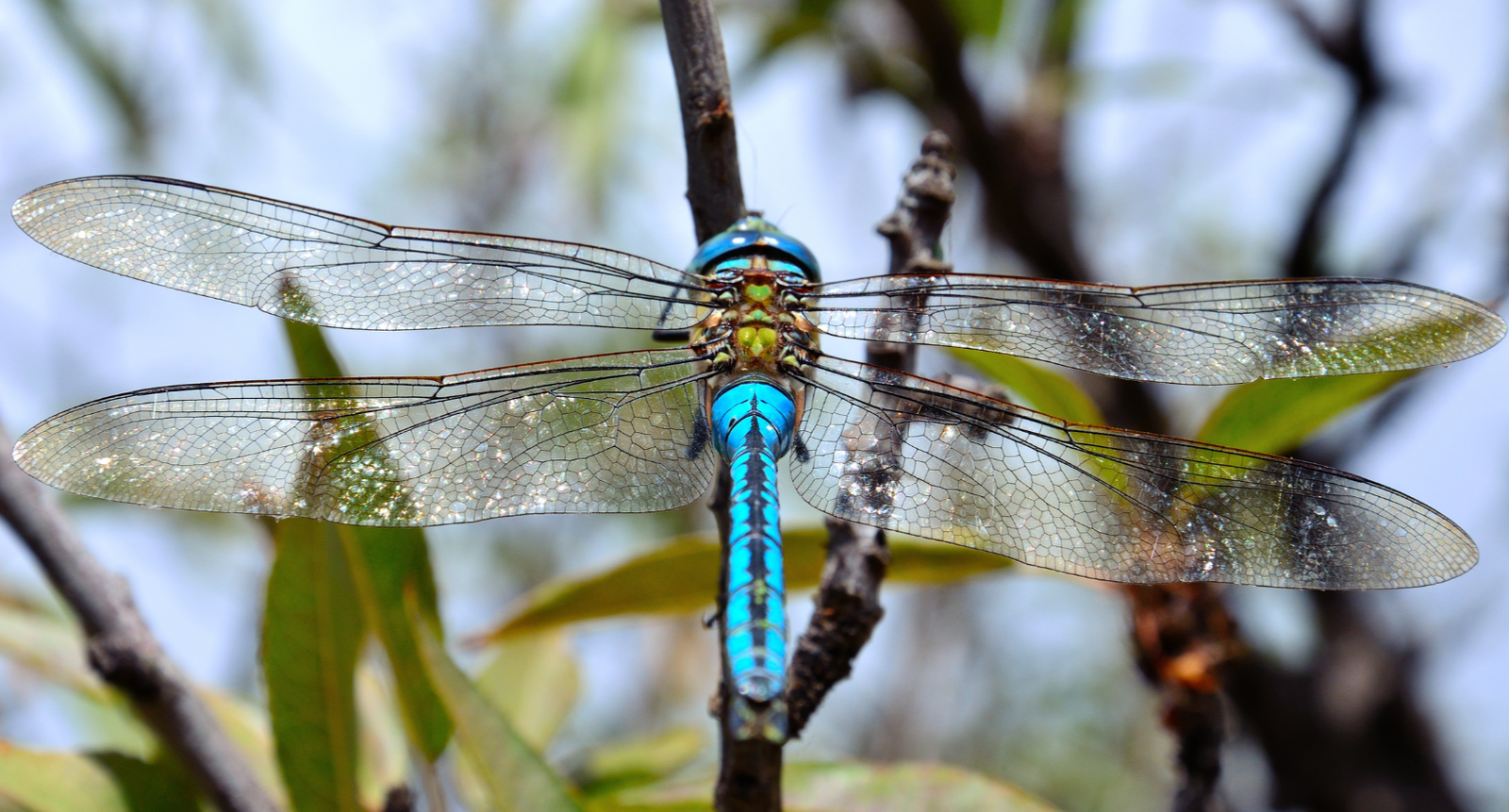
Body shape offers another useful clue. Dragonflies are usually stockier and more robust, with broad thoraxes built for speed and strength. Damselflies and demoiselles are much slimmer and more delicate in appearance, with long, elegant bodies that seem to float through the air.
If you’re close enough, take a look at their eyes too. Dragonflies have enormous eyes that usually touch or almost touch at the top of the head, giving them incredible all-round vision. Damselflies and demoiselles have eyes set well apart on either side of the head, giving them a very different look.
Finally, there’s the way they fly.
Dragonflies are confident, skillful fliers. They can hover, shoot forwards, change direction in an instant and even fly backwards. Damselflies have a gentler, fluttering flight that often seems lighter and more delicate, while demoiselles glide with an almost butterfly-like elegance as their metallic wings catch the sunlight.
The more you watch them, the easier it becomes. Before long you’ll find yourself recognising them without even thinking about it.
Don’t worry if you can’t identify every species. Even experienced naturalists sometimes need a closer look. Simply noticing whether you’ve seen a dragonfly, a damselfly or a demoiselle is a fantastic place to begin.
The wonderful thing is that none of this is about getting the name exactly right.
It’s about pausing for a moment and asking yourself:
“What am I really looking at?”
That single question has a lovely habit of turning an ordinary walk into a small adventure.
Meet the Damselfly: Small, Elegant and Surprisingly Mighty
At first glance, damselflies can look almost too delicate to survive.
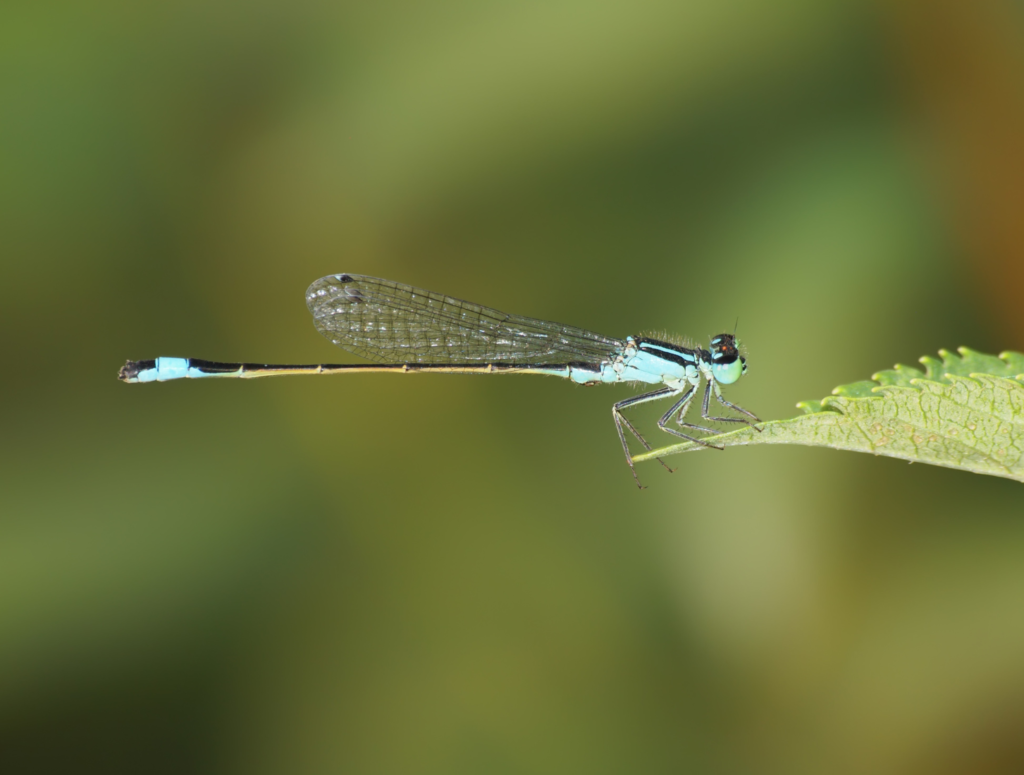
With their long, slender bodies, delicate wings and gentle fluttering flight, they seem more like jewels floating through the air than skilled hunters. But don’t let their elegant appearance fool you. Damselflies are remarkably successful predators, catching small flying insects with incredible precision.
One of the easiest ways to recognise a damselfly is when it comes to rest. Unlike most dragonflies, they usually fold their wings neatly together behind their bodies, giving them a neat, streamlined appearance.
In the UK, you’ll often spot brilliant blues, electric turquoise, emerald greens and reds glinting in the sunshine. Some species are more subtle, with soft browns or delicate black markings, while others almost seem to glow as they dart through the air.
Damselflies are closely linked to freshwater, so keep an eye out around ponds, lakes, canals, rivers and slow-moving streams. They often perch on reeds, grasses and waterside plants, pausing just long enough for you to admire them before taking off again.
Although they appear to flutter gently, they’re surprisingly agile in flight. Their large eyes help them detect movement, while their long legs form a kind of basket that scoops tiny insects from the air as they fly. Mosquitoes, midges and other small insects don’t stand much chance.
If you spend a few quiet minutes watching a damselfly, you’ll soon realise just how busy they are. They patrol their favourite perches, chase away rivals, search for food and return to the same stems again and again, making them wonderful insects to observe.
Next time you see one resting beside the water, take a moment before it flies away. Notice its folded wings, its slender body and the way it seems to sparkle in the sunlight. Once you’ve really noticed a damselfly, you’ll never mistake it for a dragonfly again.
What Makes a Demoiselle So Special?
If you’ve never heard of a demoiselle before, don’t worry—you certainly won’t be the only one.
Many people spot one for the first time and simply assume it’s a particularly colourful dragonfly. In reality, demoiselles are a family of damselflies, and once you’ve seen one, they’re hard to forget.
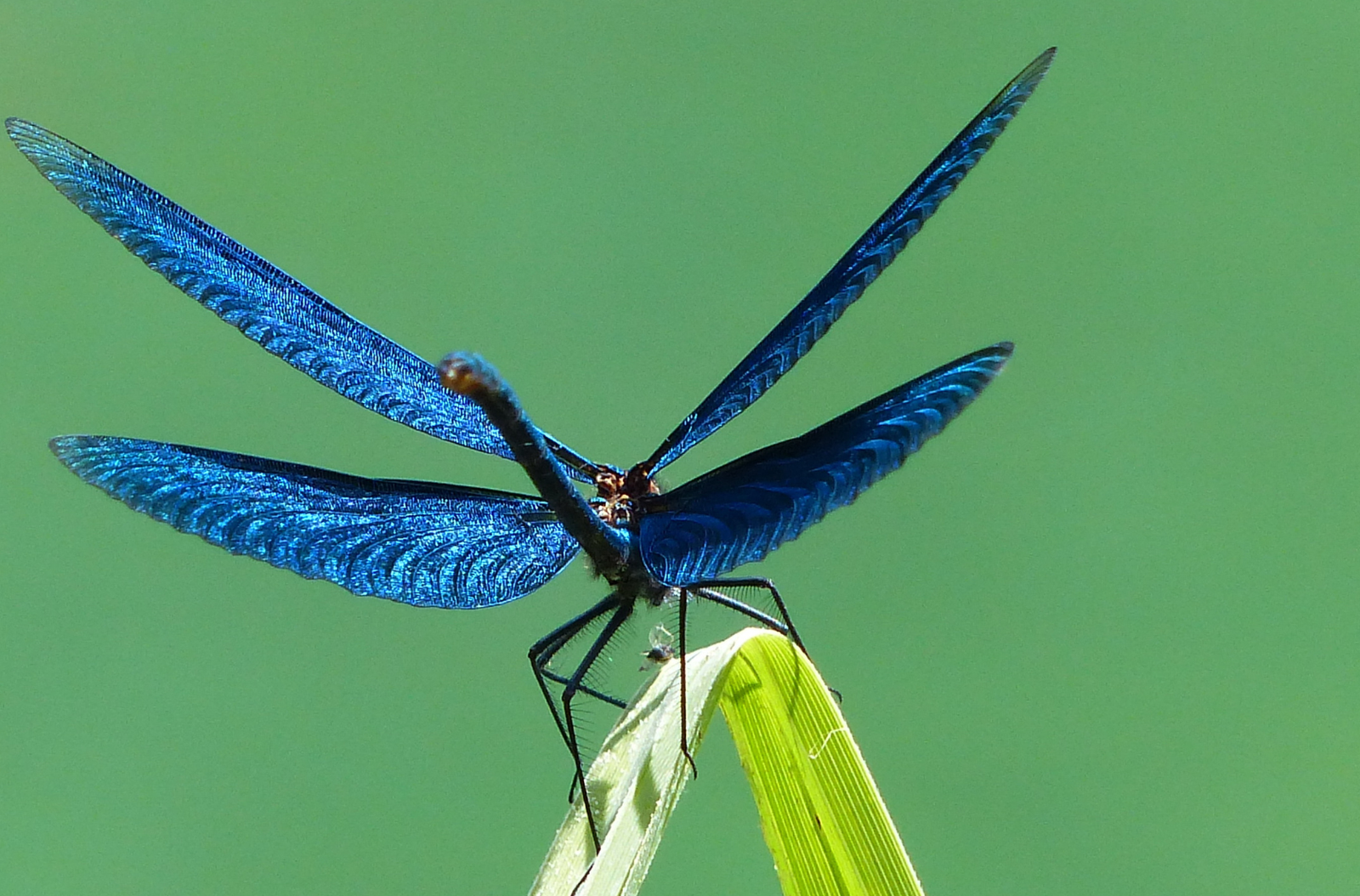
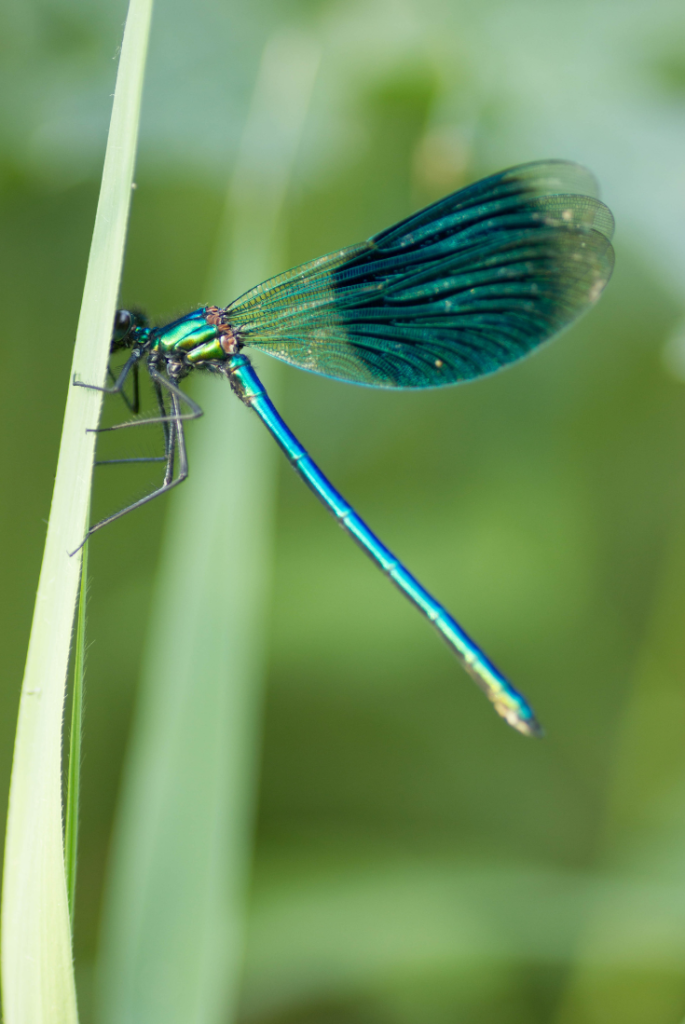
While most damselflies are admired for their delicate elegance, demoiselles take things a step further. Their slender bodies gleam with metallic blues, emerald greens and bronze tones, while their broad wings shimmer as they catch the sunlight. Depending on the species, those wings may appear almost transparent, bronze or be washed with deep sapphire blue, creating a truly magical sight as they dance above the water.
Unlike many damselflies, which happily visit ponds and lakes, demoiselles are most often found beside clean, slow-flowing rivers and streams. Look for them resting on riverside vegetation or making slower, floating flights just above the water’s surface. Rather than darting rapidly from place to place, they often seem to drift and glide, giving them an almost butterfly-like quality.
It’s easy to see why they’re often described as some of Britain’s most beautiful insects. They seem to catch the light wherever they go, transforming an ordinary summer walk into something a little more magical.
If you’re lucky enough to spot one, pause for a moment before reaching for your camera. Watch the way its wings shimmer, notice the colours changing as it moves, and enjoy the brief moment you’ve shared with one of the true beauties of the British summer.
The more closely you look, the more you begin to realise that our rivers aren’t just home to fish and ducks—they’re filled with tiny flashes of colour and life, waiting to be noticed.
Dragonflies: The Powerful Flyers of the Insect World
If damselflies are the dainty dancers of the waterside, dragonflies are the fearless aerial acrobats.
With their broad bodies, strong wings and remarkable flying skills, dragonflies are among the most impressive insects you’re ever likely to encounter. They’re built for speed, precision and agility, placing them among the most accomplished aerial predators
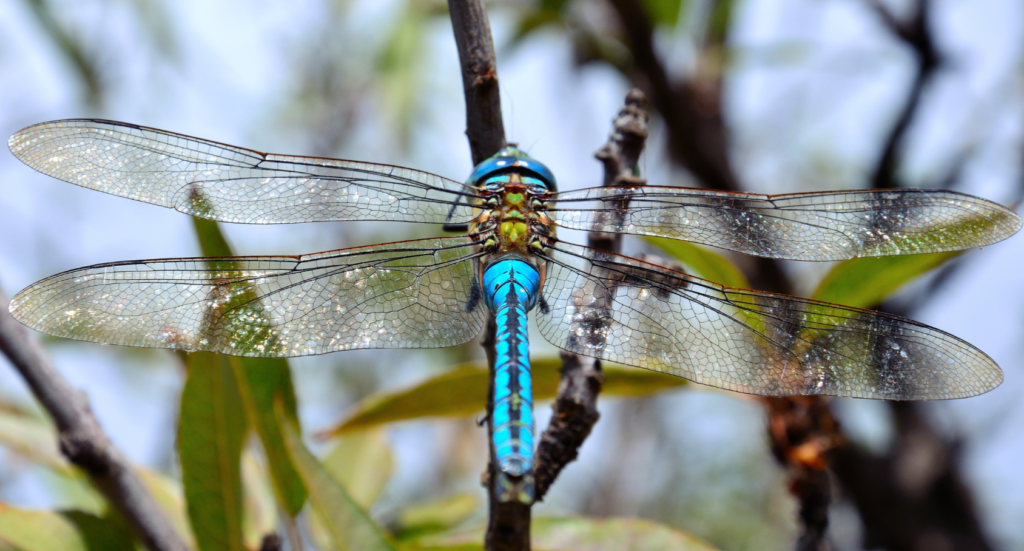
One of the easiest ways to recognise a dragonfly is when it lands. Unlike most damselflies, dragonflies usually rest with their wings held out to the sides, almost like a tiny aeroplane. Their bodies are also much stockier and more robust, giving them a very different appearance from their slender relatives.
When learning the difference between damselflies and dragonflies, their flight can be just as helpful as their appearance. Damselflies tend to flutter gently from perch to perch, while dragonflies power through the air with astonishing speed and control. They can hover like a helicopter, shoot forwards in an instant, make sharp turns, fly sideways and even fly backwards.
Their eyesight is just as extraordinary. Dragonflies have enormous compound eyes that can detect movement from almost every direction, helping them spot prey while avoiding danger. Combined with their incredible flying ability, this makes them highly effective predators.
Rather than chasing insects from a flower or a leaf, dragonflies often catch their prey while both are in flight. Mosquitoes, flies, midges and other small insects are snatched from the air with remarkable accuracy, making dragonflies an important part of healthy freshwater ecosystems.
Perhaps most amazing of all is their history. Dragonflies belong to one of the oldest groups of insects on Earth. Their ancestors were already flying long before dinosaurs appeared, and some prehistoric relatives had wingspans of more than 60 centimetres. While today’s dragonflies are much smaller, they’re still perfectly adapted for the same fast-paced life in the skies.
The next time a dragonfly zooms past, take a moment to watch rather than simply admire. Notice the broad body, the outstretched wings and the effortless way it changes direction. Once you’re familiar with them, you’ll begin to appreciate that each has its own unique way of mastering the air. However, dragonflies do come in lots of shapes and sizes – just to make things even more interesting.
Hawkers and emperors are the classic dragonfly you will instantly recognise; darters look like chunky damselflies. Then there are skimmers, chasers and the humongous golden-ringed dragonfly!
They’re such skilled hunters that I recently watched a hawker chasing a hummingbird hawk-moth around the garden. It came incredibly close, but the moth escaped at the last second before the dragonfly carried on quartering the garden, searching for its next opportunity.
Where Can You Spot Damselflies and Dragonflies?
The wonderful thing about dragonflies and damselflies is that you don’t have to travel to a remote nature reserve to see them. If there’s freshwater nearby, there’s every chance they’re already there.
Keep an eye out around:
- Ponds
- Lakes
- Canals
- Slow-moving rivers and streams
- Wetlands and marshes
- Wildlife-friendly gardens with ponds
Warm, sunny days are usually the best time to look, especially when there’s little wind. They often choose sheltered spots where they can hunt, rest and warm themselves in the sunshine.
Rather than searching frantically, try slowing down.
Pause beside the water for a few minutes. Watch the reeds. Follow a flash of blue or a glint of emerald as it catches the light. You may notice a dragonfly returning to the same perch time and again, or a damselfly resting quietly on a blade of grass.
The secret isn’t looking harder.
It’s noticing more.
Once you begin paying attention, you’ll often realise these remarkable insects were there all along.
Interesting Facts About Dragonflies and Damselflies
Here are a few fascinating facts to impress your next walking companion!
- Dragonflies belong to one of the oldest groups of insects on Earth, with ancestors flying more than 300 million years ago.
- Some prehistoric relatives had wingspans of over 60 centimetres.
- Dragonflies and damselflies spend most of their lives underwater as aquatic larvae before emerging as the winged adults we recognise.
- Dragonfly larvae are fierce underwater predators. Larger species can catch everything from mosquito larvae and tadpoles to tiny fish and even young newts (or efts).
- Dragonflies have enormous compound eyes that allow them to see almost 360 degrees around them.
- Damselflies also begin life beneath the water, where they’re fierce little predators long before they ever take to the air.
- Both dragonflies and damselflies are excellent indicators of healthy freshwater habitats, so seeing them is often a sign that the local environment is thriving.
The more you learn about them, the more extraordinary these familiar summer stalwarts become.
Why Noticing Tiny Wildlife Changes the Way We See Nature
It’s easy to think that wonder lives somewhere else.
A mountain range.
A rainforest.
A wildlife documentary filmed on the other side of the world.
But some of nature’s greatest spectacles are happening right beside us.
Learning the difference between damselflies and dragonflies isn’t about becoming an expert or remembering complicated names. It’s about discovering that the world becomes richer when we pause long enough to notice it.
The next time you walk beside a pond or river, you may find yourself spotting things you would once have walked straight past.
A dragonfly hovering like a tiny helicopter.
A damselfly resting delicately on a reed.
A demoiselle catching the sunlight with shimmering wings.
Nothing about the landscape has changed.
Only the way you’re looking at it.
And sometimes, that’s enough to transform an ordinary walk into something quietly extraordinary.
Flourish Challenge
The next time you’re near water, pause for just five minutes.
Instead of trying to identify every insect you see, simply notice:
- How does it fly?
- Where does it choose to land?
- Does it rest with its wings open or folded?
- How does the sunlight catch its colours?
You don’t need to know its name.
You don’t need an identification guide.
Just notice.
You may be surprised by how much there is to discover when you slow down.
Conclusion
You don’t need to become a wildlife expert to enjoy dragonflies and damselflies.
Curiosity is far more important than knowing every name.
Each summer, these remarkable insects fill our ponds, rivers and gardens with flashes of colour, speed and extraordinary skill. By learning just a few simple differences, you’ll begin to see them in a completely new way.
As the days gradually shorten and autumn approaches, take a moment to enjoy these fleeting creatures while they’re still around.
If you’re wondering whether you’ve seen a dragonfly, damselfly or demoiselle, remember that behaviour is often just as helpful as colour. Watch how it flies, where it lands and how it rests before reaching for an identification guide.
Learning the difference between damselflies and dragonflies isn’t really about identification – it’s simply another reason to slow down, look a little closer and discover the remarkable wildlife that’s been waiting for you all along.
❤️🌿
Notice more.
Exhale often.
Flourish, wild ones. 🦊
Clare 🌿
If you’d like to see more of how I experience nature for reset and burnout support, I’d love to share my journey with you on Instagram, Tik Tok or through my monthly newsletter.